
When Jane Berry hung her piece of family history on her studio wall, she had no idea what pattern her grandmother’s buggy blanket was woven in. The coverlet had been divided among siblings, leaving Jane with a framed fragment and a question: what is this draft?
What followed was a fascinating journey through overshot pattern books, historical weaving traditions, and the subtle clues hidden in antique textiles.
The First Clues
Jane initially thought the pattern might be Monmouth (also called Monument), a well-known Canadian overshot draft that appears frequently in Dorothy Burnham’s comprehensive book Keep Me Warm One Night.
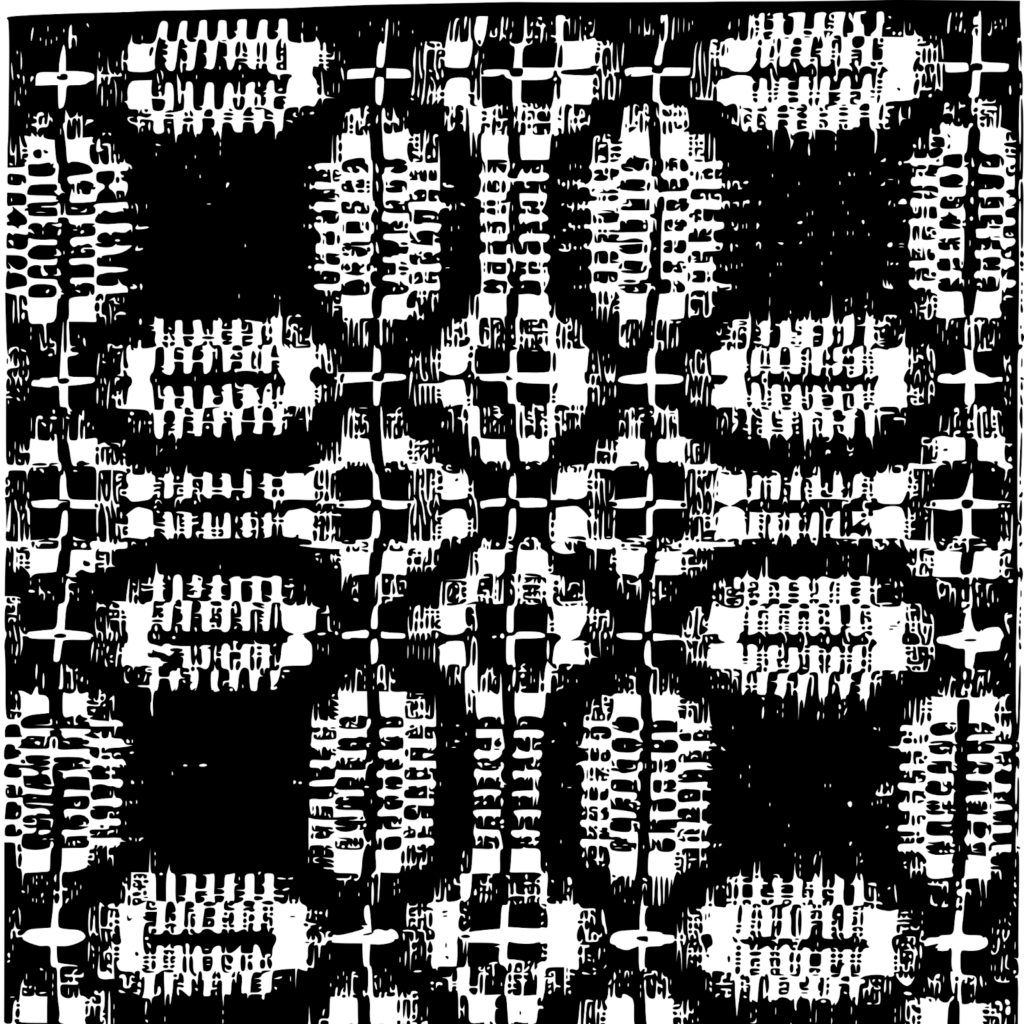
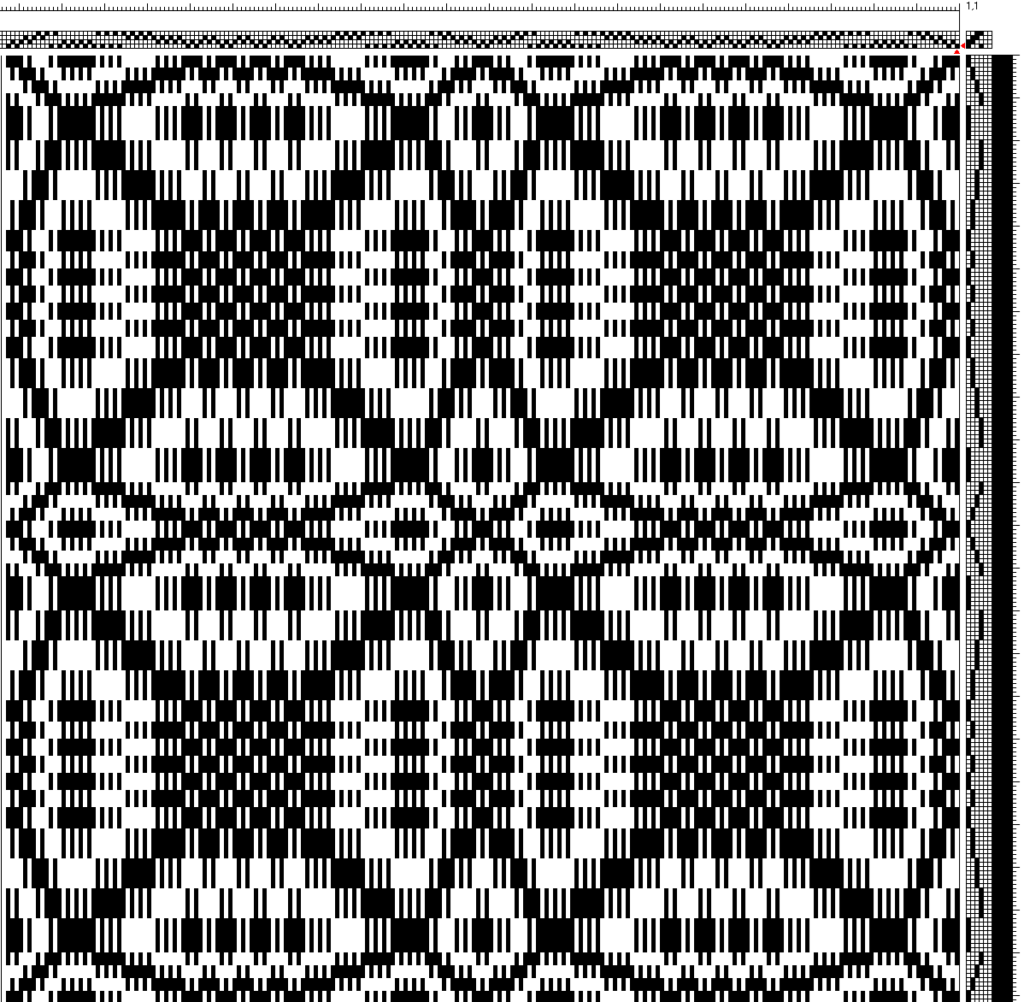
The block order is similar, though there’s more going on between the tables in the buggy blanket. But something else significant wasn’t quite right.
The key difference? Threading on opposites.
Understanding “Opposites”
In overshot weaving, threading on opposites creates a distinctive look where pattern floats sit directly next to (often stark white) background with no transitional halftones between them. This technique emphasizes certain design elements dramatically, but it’s not commonly used because it affects how halftones appear throughout the piece.
Look at the buggy blanket and you’ll see these telltale signs: centers of stars with sharp contrast between pattern and background, surrounded by unusually large zones of halftones. The sharp contrast and oversized halftone areas are a dead giveaway that opposites threading is at work.
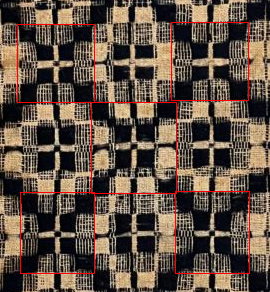
Monmouth is never threaded on opposites. So despite the similar block arrangement, this couldn’t be Monmouth.
An Unusual Feature
The buggy blanket had another intriguing characteristic: a cross of stars with no connectors between them. In most traditional overshot patterns, stars are separated by small linking motifs. Here they simply repeated – star, star, star – in an unbroken line. Additionally, all the star centers were threaded – on opposites! – on the same two blocks, creating visual consistency throughout.
The Search
I began by deriving the actual draft from Jane’s photograph, essentially reverse-engineering the threading by analyzing the visible pattern, complete with any idiosyncrasies present in the fabric, like the differently sized blocks on the edges of the central star.
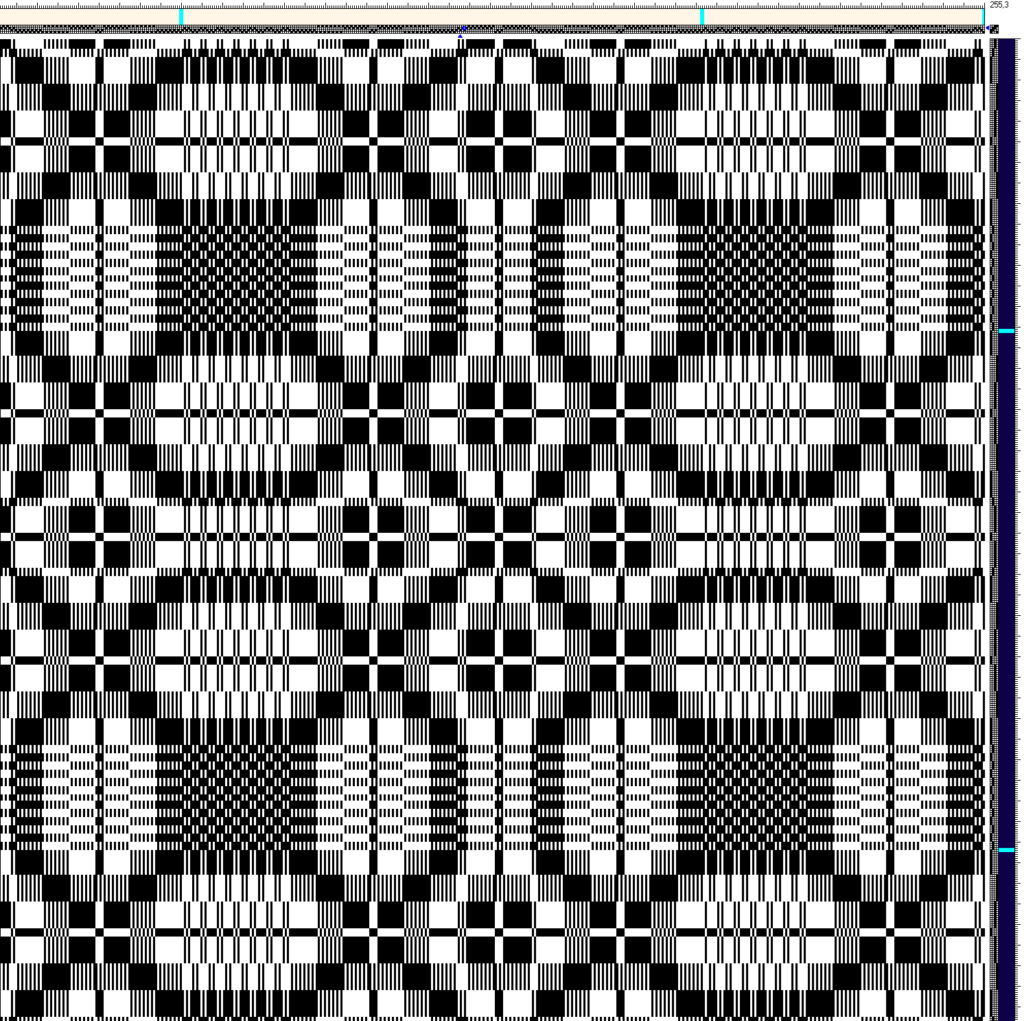
Once that was complete, the hunt for a name and origin began.
First stop: Marguerite Davison’s A Handweaver’s Pattern Book. Not there. Next: A Handweaver’s Source Book. Still nothing. Then on to Florence Mackley’s Handweaving in Cape Breton, which documents local Nova Scotia patterns. A few drafts showed promise, but they all had those connectors between stars rather than the star-to-star arrangement of the buggy blanket.
The Breakthrough
The answer came from an unexpected source: Lou Tate’s Cape Breton Coverlet Patterns. Tate ran the Little Loomhouse in Kentucky for many years and corresponded with Mackley in the 1950s and ’60s. Before Mackley published her own collection, Tate had compiled a book of Cape Breton drafts.
There it was: Ladies Delight. It was one of the drafts from Mackley’s book I thought showed promise; something about the presentation in Tate’s book minimized the differences between it and Jane’s buggy blanket while drawing my attention to the key similarities.
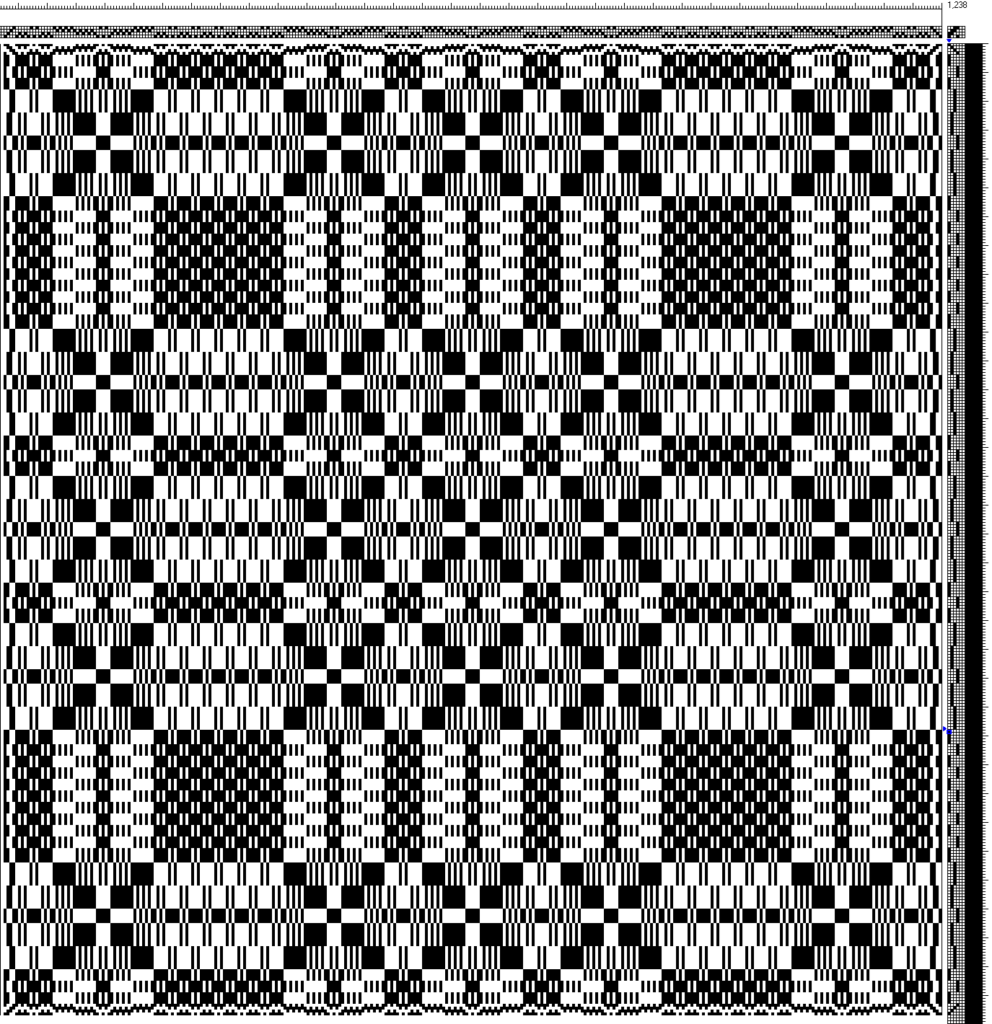
Ladies Delight had stars threaded on opposites which are uncommon enough to be significant. The connectors between stars also used threading on opposites. And those halftones appeared in all the right (or peculiar) places.
Making the Connection
The scales and proportions weren’t identical. Ladies Delight had smaller blocks overall, and the buggy blanket’s stars were larger and more dramatic. Where Ladies Delight had 6 ends per block in the stars, the buggy blanket used 12. Some blocks that were small in one draft were large in the other.
There were more stars between tables and the tables themselves were missing a heavy block at the corners, but the similarities outweighed the differences.
By expanding the small connector motif in Ladies Delight into a full star, and adjusting the block proportions, Ladies Delight transforms into the buggy blanket.
The Transformation
Starting point: The draft of the buggy blanket fabric on the left, with Ladies Delight on the right:
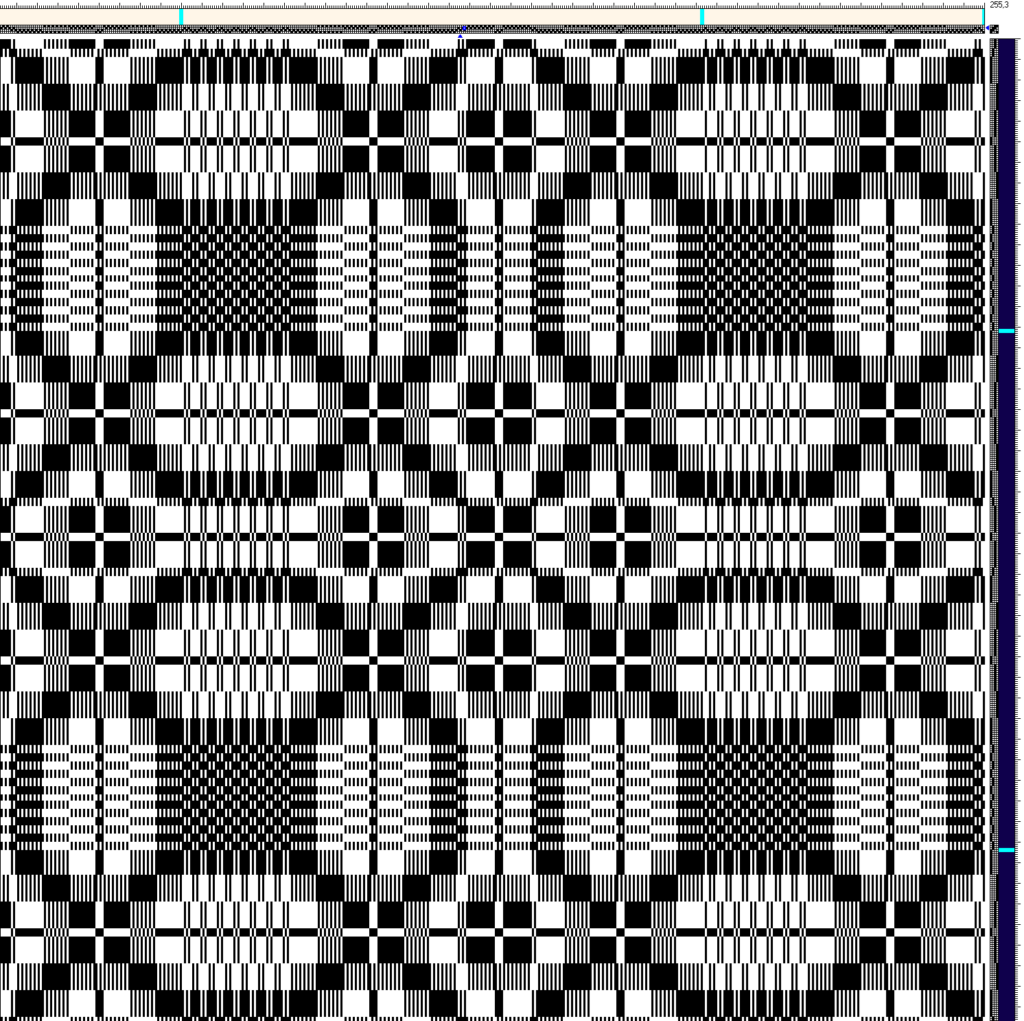
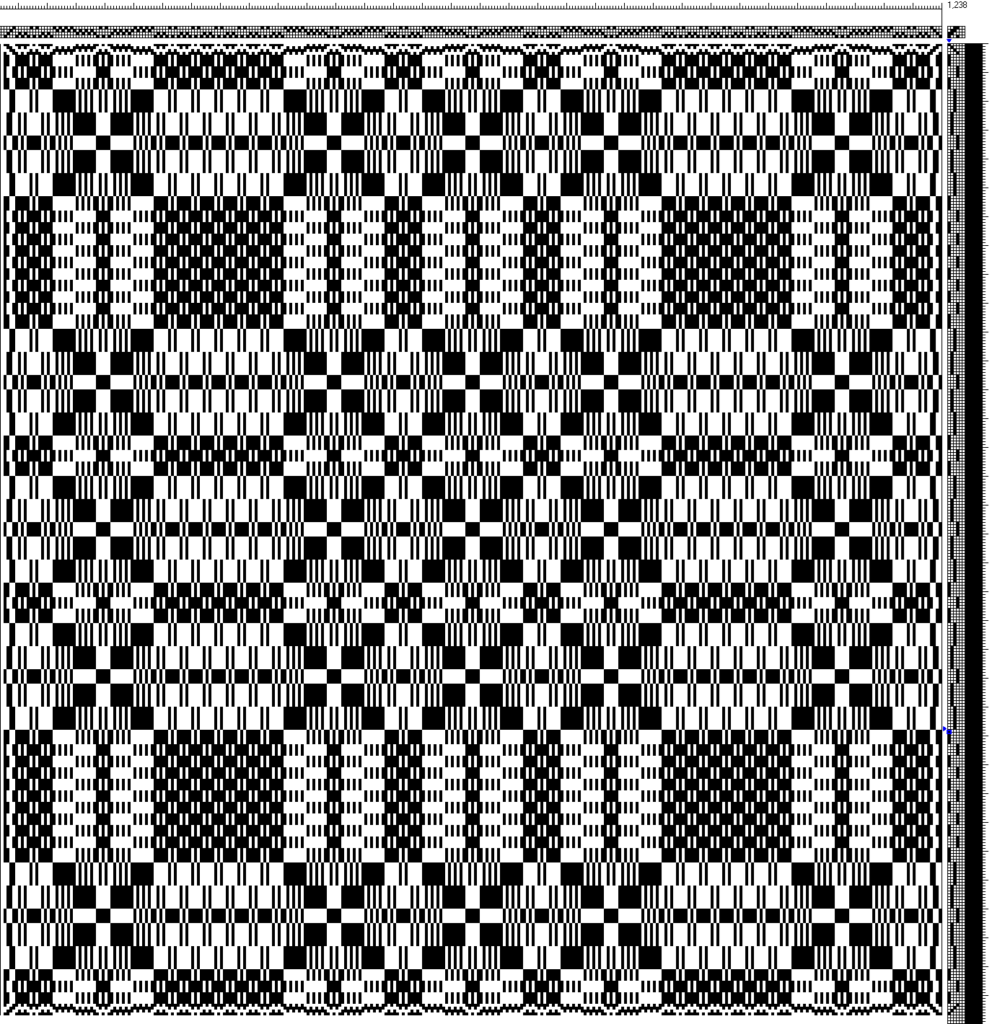
Change 1: Reduce the number of stars in the center field
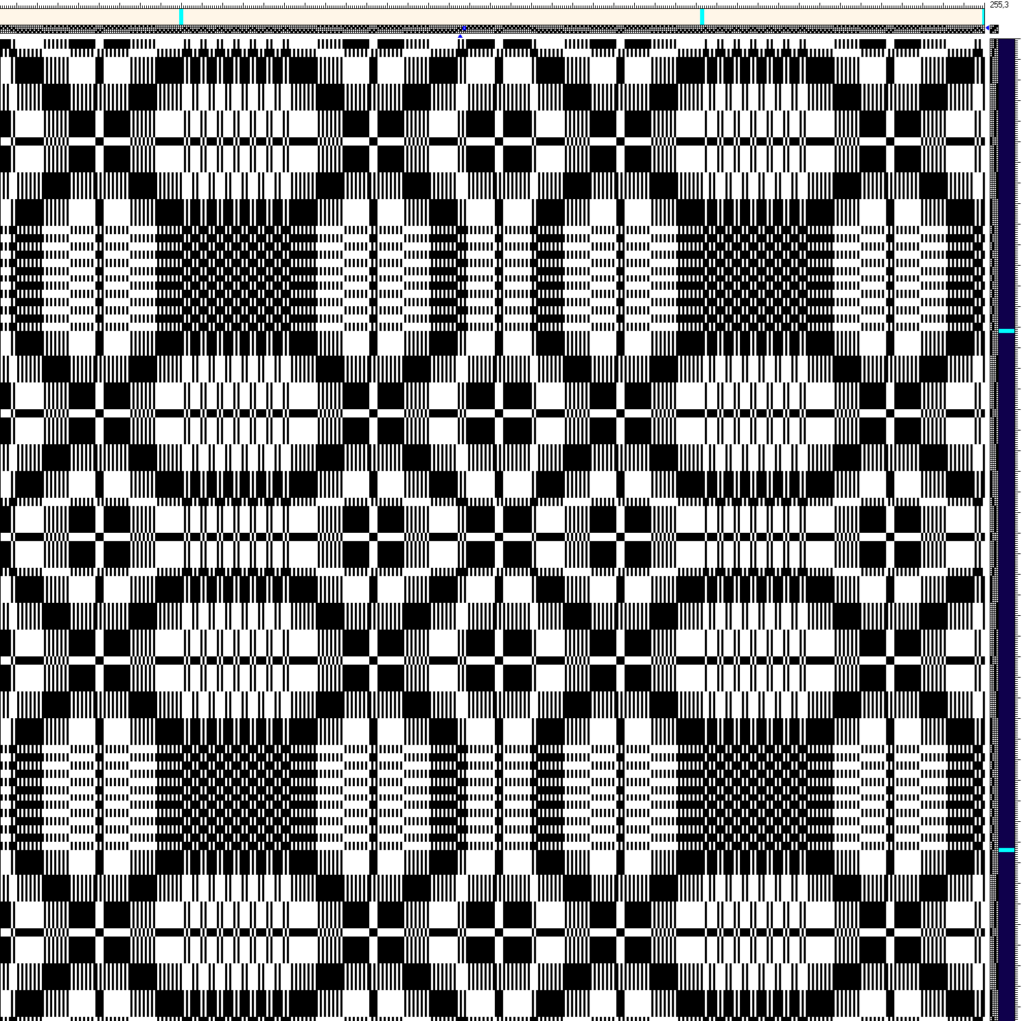
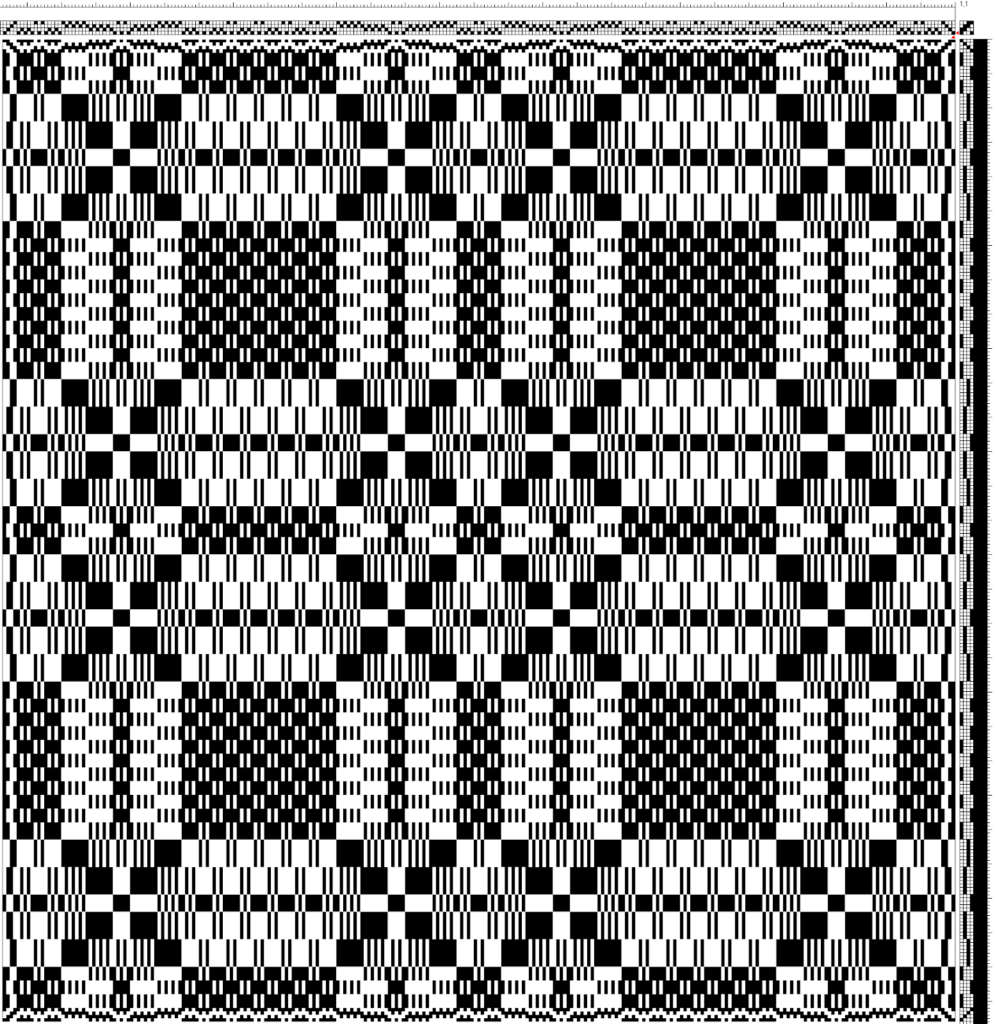
Change 2: Expand the connector between stars into a star in its own right
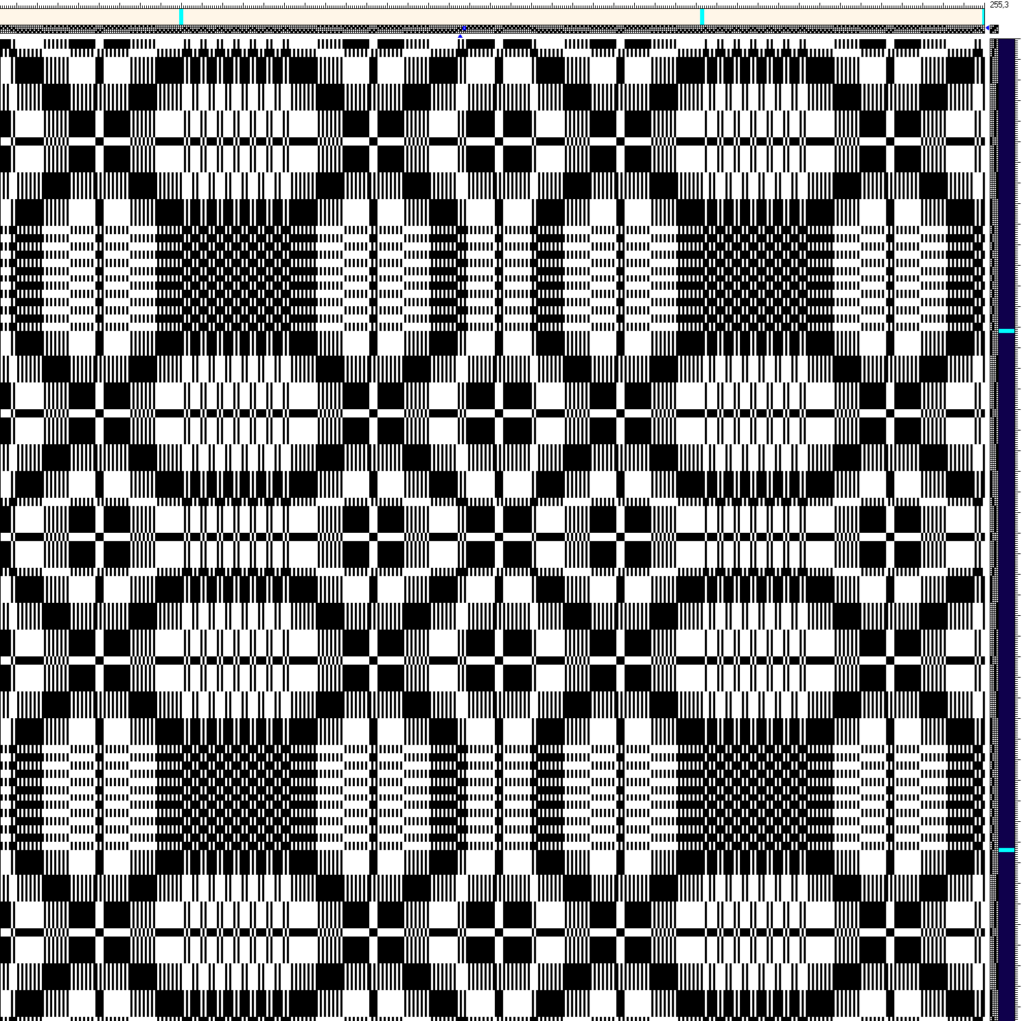
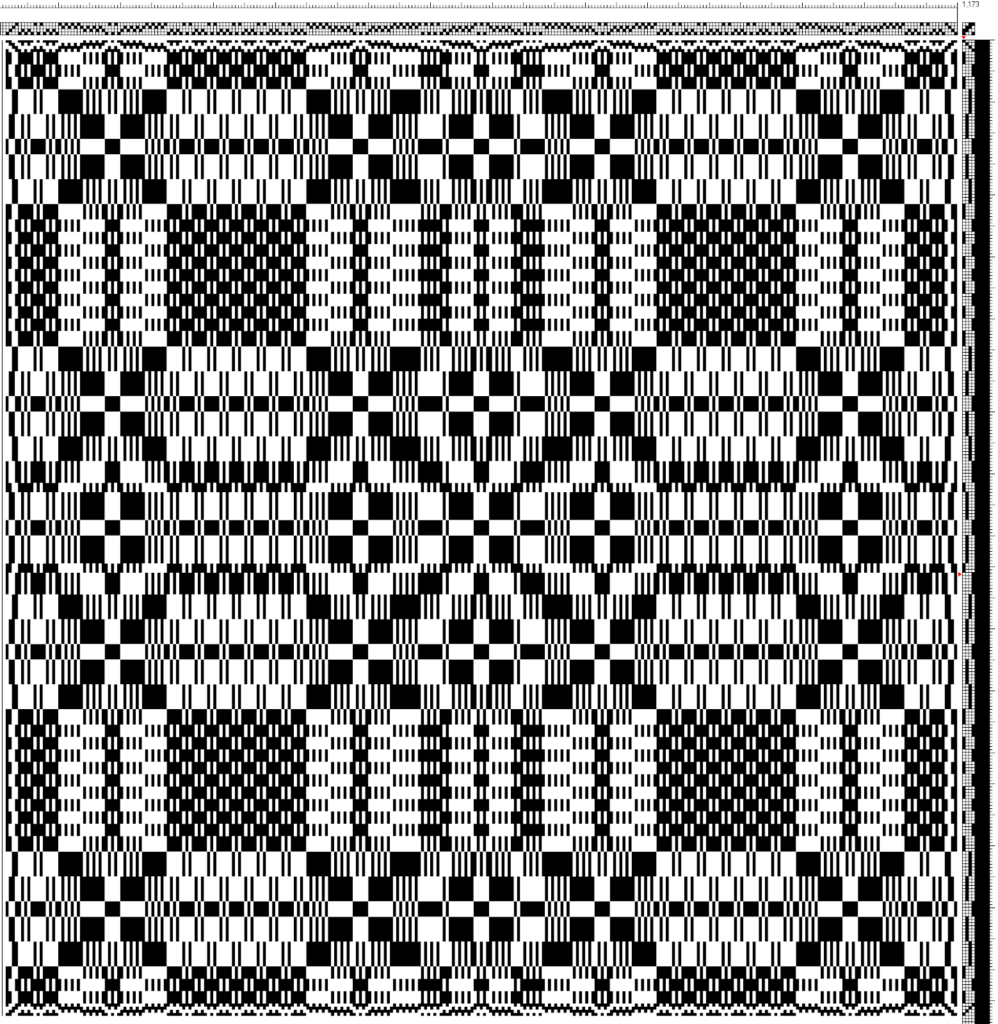
Change 4: Add one block at the edge of the table
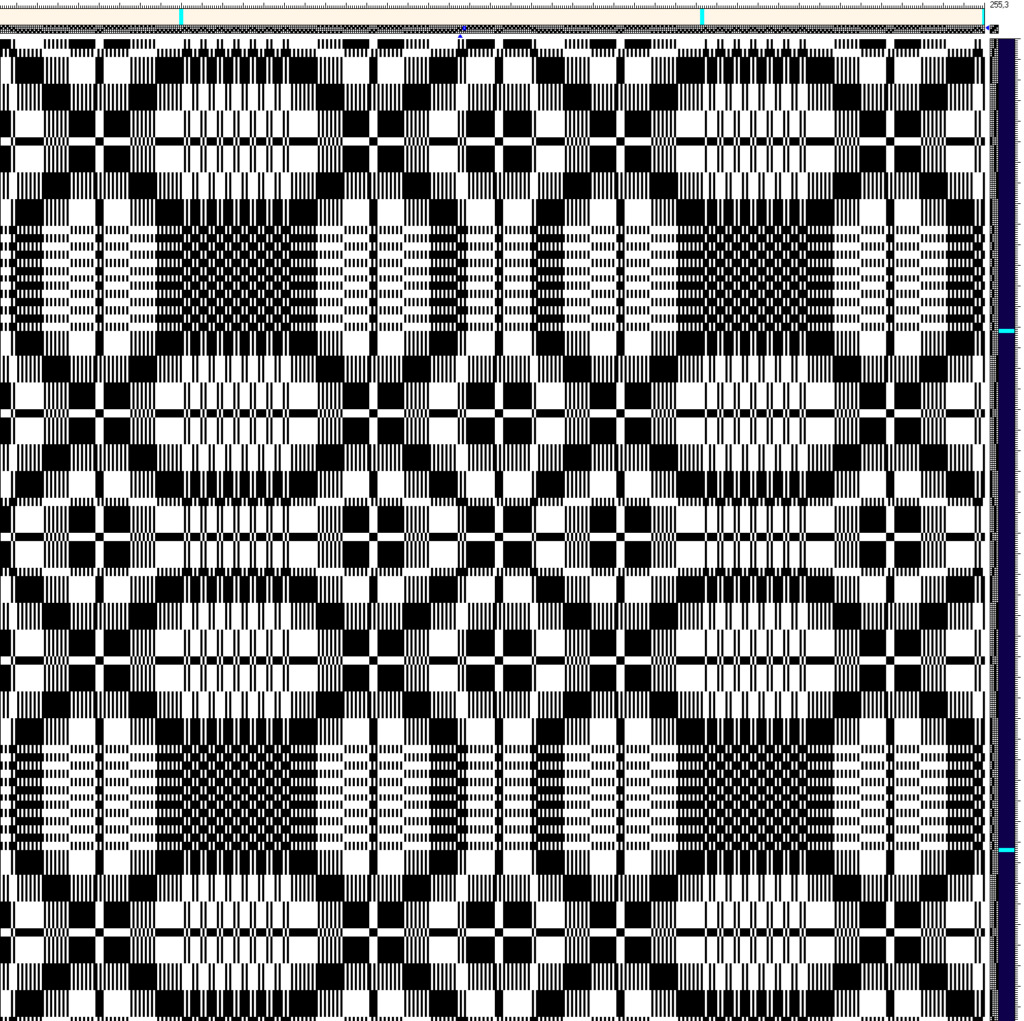
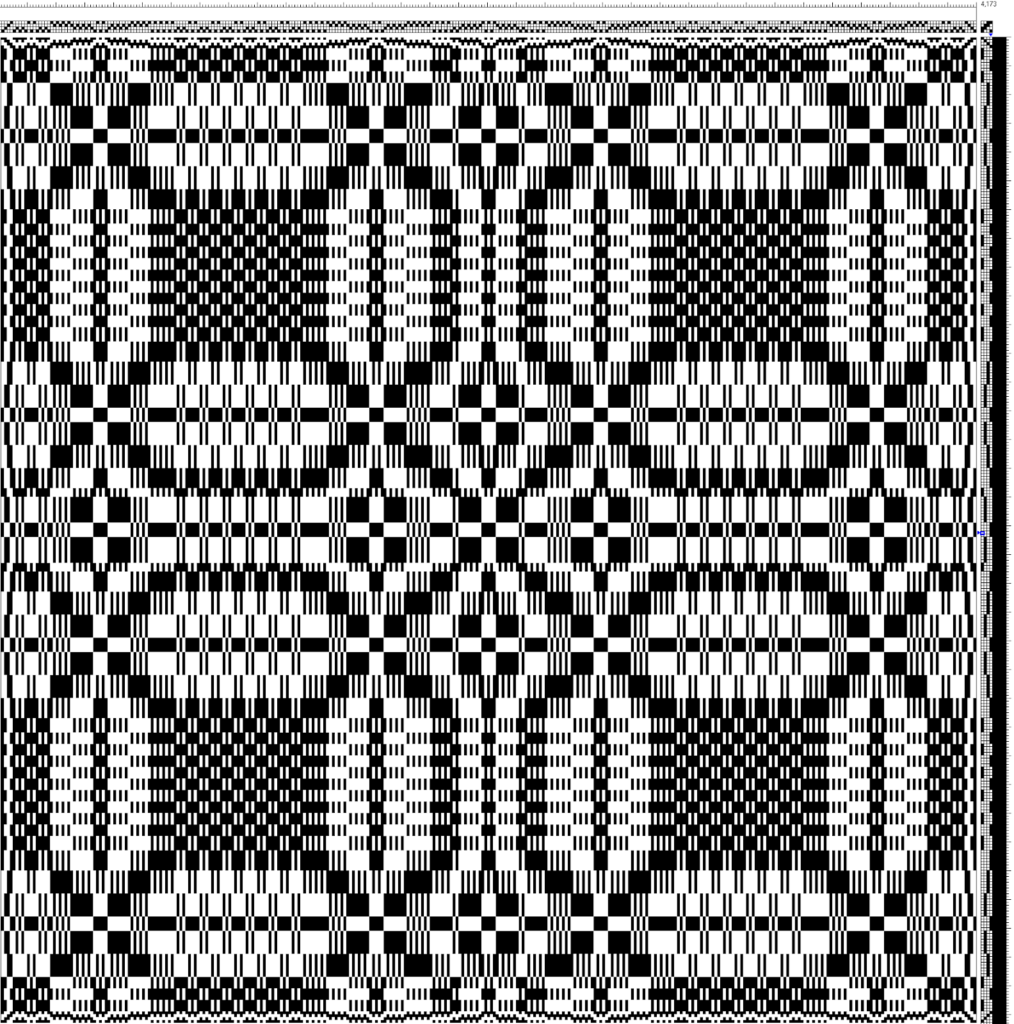
Ta da! The block sizes still aren’t in quite the same proportions (the threading repeat of the buggy blanket’s draft is 252 ends while Ladies Delight’s repeat is only 154 ends) but the spirit of the drafts is the same.
The Verdict
Jane’s buggy blanket may be considered a variation of Ladies Delight, the same draft with what you might call a different accent or flavor.
Ladies Delight is documented as a Cape Breton draft, though it likely didn’t originate here. Scottish immigrants probably carried this pattern across the Atlantic, with one group bringing it to Cape Breton while another took it to wherever Jane’s family settled.
This kind of textile detective work reveals how traditional patterns evolved and traveled, adapting to different weavers’ hands while maintaining their essential character. The buggy blanket may have slight differences from the published Ladies Delight, but those variations tell their own story, of a weaver making the pattern their own, of human hands creating without software to perfect every detail.
And now, generations later, Jane has both her family heirloom and the draft to weave it again.

Want to read more about overshot resources? Check out Which version of A Handweaver’s Pattern Book should I buy: Green, orange or Brown?