In 2006, I discovered weaving, and fell head over heels.
I loved everything about it. The feel of yarn running through my fingers, the rhythm of the shuttle flying from hand to hand, the satisfying thump of the beater placing each wet pick. And oh, the magazines and pattern books! Each project more enticing than the last.
For my first few projects, I did exactly what every beginner does: I followed directions. Step by step, thread by thread. And it was wonderful. There’s something deeply satisfying about watching a beautiful design emerge exactly as the creator intended.
But the next project was different.
The Moment Everything Changed
I found a scarf pattern in Handwoven that caught my eye. I studied the photo, read through the instructions, and then… something changed. I didn’t feel satisfied with it. It didn’t feel quite right. Not for me, not for the yarn in my stash, not for my personal style.
And suddenly, I turned into an endless fountain of questions:
What if I used different colors?
What if I made it narrower? Or wider?
What if I swapped out these yarns for something from my stash?
What if – and this is where it got really interesting – what if I took this draft, swapped out the yarns and colors, and made PLACEMATS instead of a scarf?
That moment, that glorious, terrifying, exhilarating moment of asking “what if?” changed everything.
When Directions Become Starting Points
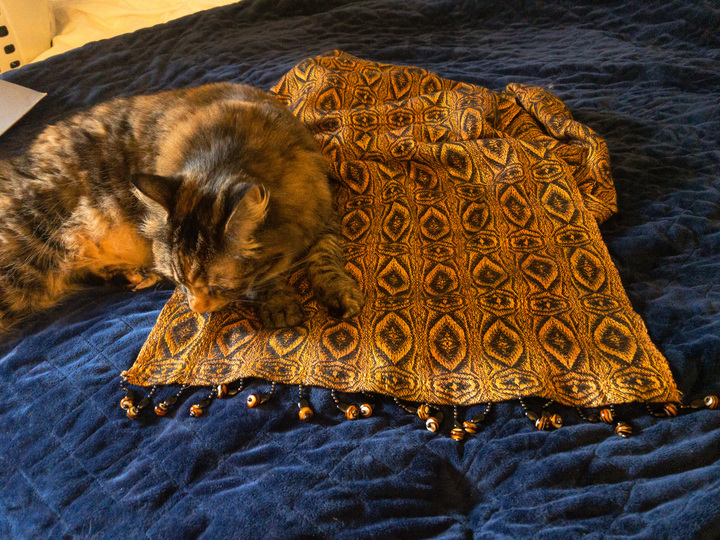
Here’s what I didn’t realize at the time: I had just crossed an invisible threshold. I had moved from being a pattern follower to being a designer. Not a confident designer, mind you. Not an experienced designer. But a designer nonetheless.
Because that’s what design is: it’s asking “what if?” and then figuring out how to make your visions real.
Those what-if questions weren’t something books or videos could answer. At least, not without a lot of floundering on my part. I needed to talk to other weavers, see what they had done, experiment with my ideas, practice my skills, and get feedback on my designs.
Most of all, I needed to learn not just techniques and structures, but how to make the projects I wanted to make. The ones that lived in my imagination, and wanted to become reality.
The Search for Answers
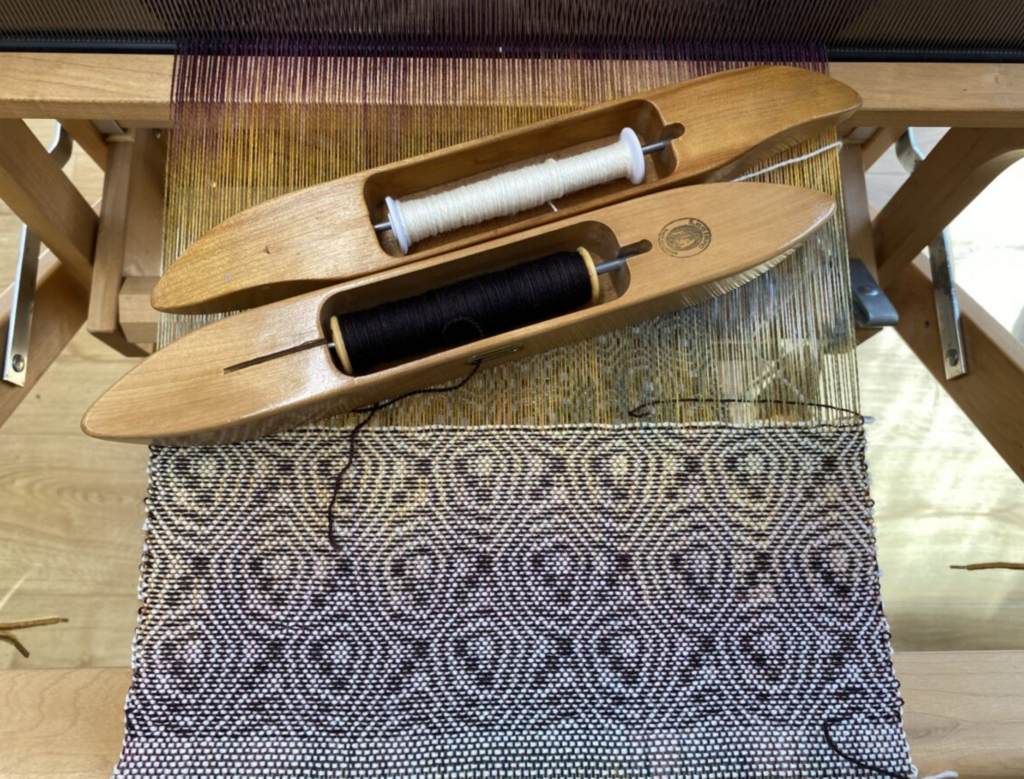
I started searching for that learning community, a place where my what-if questions would be welcomed, explored, and answered. Where I could learn progressively, building skill upon skill. Where I could see what others were making and get inspired.
I looked everywhere. My weaving guild met only once a month. In-person classes were sporadically available, but covered only isolated topics. And they certainly couldn’t handle my flood of questions when I started designing my own projects!
So I kept learning – from books, from generous mentors, from many hours at the loom (including plenty of not-quite-rights and downright disasters). Eventually, I learned to design my own projects – and to do it well.
But I couldn’t stop dreaming of that magical weaving school with a community of fellow explorers who would help me answer my what-if questions.
Creating What Doesn’t Exist
Author Toni Morrison once said, “If there’s a book that you want to read, and it hasn’t been written yet, then you must write it.”
As a teacher, I understood the power of community-supported learning. And I started asking myself a new kind of what-if question: What if I could make that school I dreamed of? What if I could bring something like that into being?
The Handweaving Academy is our answer to that what-if. It’s the dream that Janet and I have carried all our lives: a weaving school with a thorough curriculum combined with a supportive community that helps weavers answer their what-ifs.
Your Turn to Ask “What If?”
So here’s my challenge to you: Look at your next project. Are you following directions to the letter? That’s perfectly fine, there’s real value in that. Especially when you’re learning a new technique or structure.
But maybe, just maybe, it’s time to ask your own what-if questions.
What if you changed the colors to match your favorite painting?
What if you widened it to make a table runner instead of a scarf?
What if you used your handspun yarn?
What if you designed something entirely your own?
Those questions – those beautiful, scary, exciting what-if questions – are the secret to designing your own projects. They’re the gateway from following directions to creative exploration. They’re the beginning of finding your own unique voice in weaving.
And when you start asking them, everything changes.
Welcome to the world of design. We’re glad to have you here.
From the Weavers Toolbox: