Handwoven gifts are truly special. They represent hours of thoughtful work, careful planning, and genuine love. But what transforms a beautiful handwoven piece into something truly unforgettable is when it captures the essence of the person who will receive it: their personality, their passions, their story.
For many of us weaving is the easy part, it’s capturing our recipient’s spirit that is the hard part. Following are some ideas to create woven projects that don’t just showcase your technical skills, but celebrate the unique individual you’re weaving for.
Starting with the person, not the project
When most weavers begin a project, they start with the “what”….a scarf, a table runner, a set of towels, etc. But when you’re creating something personal, flip that approach on its head. Try to start with the “who.”
Begin by asking yourself: What makes this person unique? What brings them joy? What colors do they gravitate toward? What’s happening in their life right now that you want to honor?
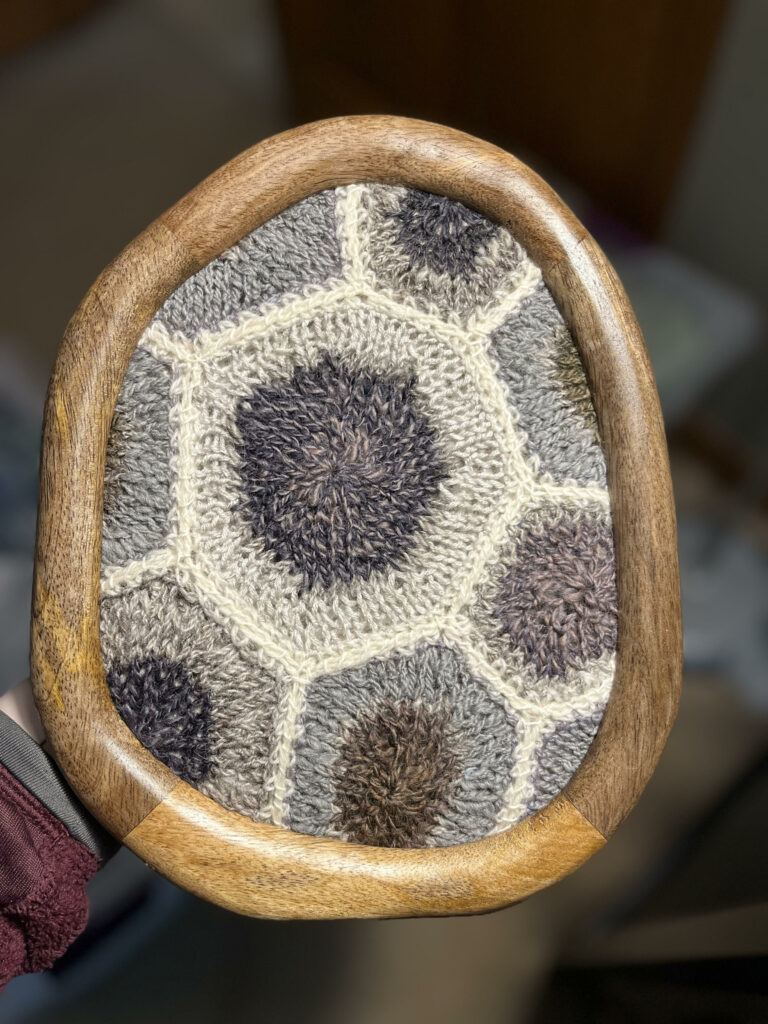
Joy Hogg shared a beautiful example of this approach. Her daughter had been creating framed knitted pieces inspired by Petoskey stones – fossilized coral stones found near Lake Michigan. She wanted to celebrate her daughter’s creativity and success, so she planned a table runner using the same neutral grays, browns, and creams her daughter used in her knitting. The design would be simple, soothing, and repetitive, reflecting both the color and mood of the stones themselves. The runner would be divided into four subtle sections representing the four people in her daughter’s family.
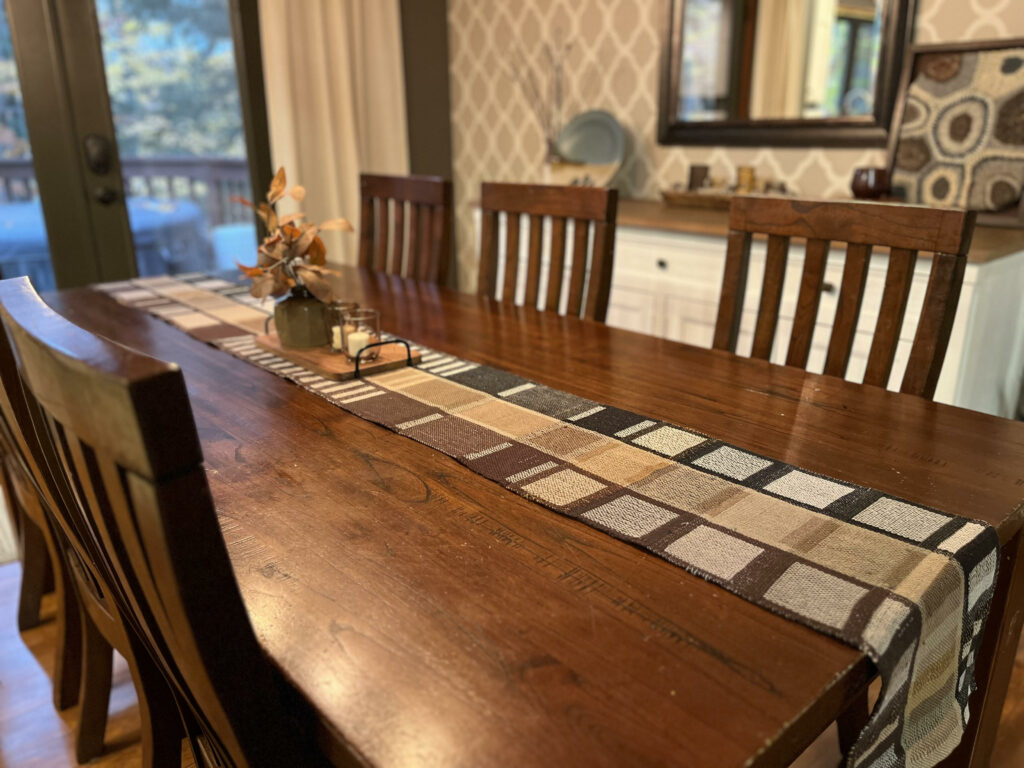
Every time the daughter looks at that runner, she’ll see not just a beautiful piece of weaving, but a reflection of her own creative journey and her mother’s pride in her accomplishments and the connection they experience through their shared love of fiber.
Understanding the power of color and mood
Color is your most powerful tool for capturing someone’s personality and creating the right emotional response. The mood of a piece comes from four key factors: lighting, drama, energy, and cultural or personal meaning.
Lighting: Setting the Emotional Tone
The values you choose, whether your piece is predominantly light, dark, or medium, create a subconscious sense of lighting that influences mood. Dark values evoke feelings of mystery, contemplation, or regal elegance. Light values feel dreamy, meditative, or pure. Medium values create an everyday, comfortable feeling.
Think about your recipient. Are they drawn to bright, airy spaces or do they prefer cozy, intimate settings? A person who loves minimalist, light-filled rooms might appreciate a piece in predominantly light values, while someone who decorates with rich, jewel tones might prefer deeper values.
Drama: matching energy levels
When we say drama, we don’t mean the fight you had with your sister last Thanksgiving! Drama in weaving comes from contrast, particularly value contrast between adjacent colors. High contrast creates visual tension and excitement, while low contrast produces a peaceful, harmonious feel.
Consider your recipient’s personality. Are they bold and energetic, or calm and contemplative? Someone who loves adventure and vibrant experiences might appreciate strong contrasts, while a person who values tranquility might prefer a gentle gradient of similar values.
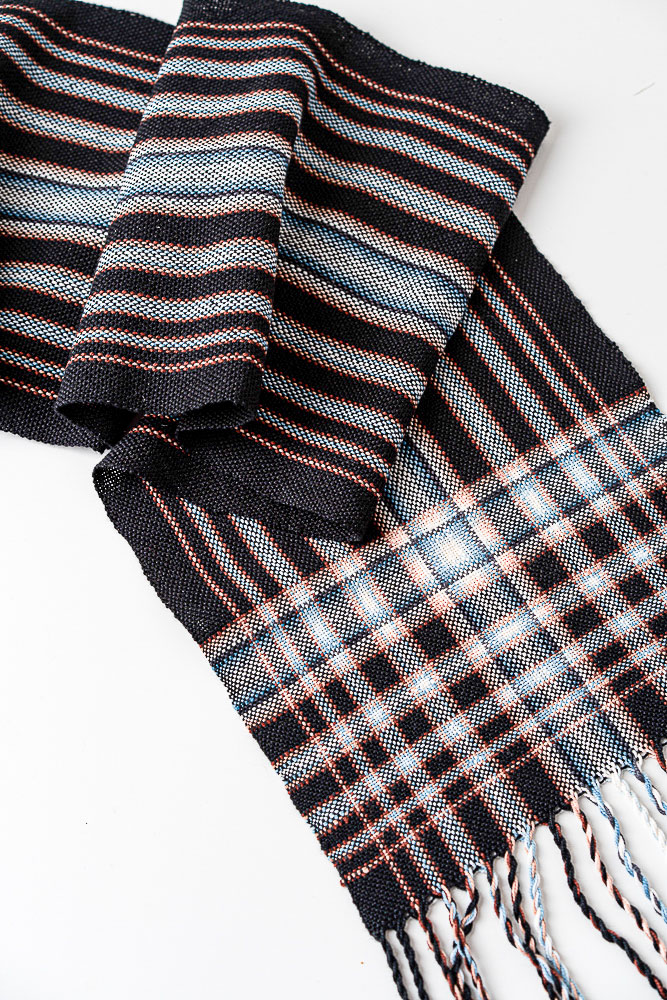
Energy: capturing personality through hue and saturation
Highly saturated, warm colors create a very different feeling from cool, muted tones. Brilliant oranges and reds feel vibrant and alive. Soft blues and grays feel serene and peaceful.
Match the energy level of your color choices to your recipient’s personality. A person with a quiet, introspective nature might feel overwhelmed by highly saturated colors, while someone with an outgoing, enthusiastic personality might find muted colors too subdued.
Personal and cultural meaning
Colors carry meaning that varies by culture and personal experience. Purple might remind someone of their beloved grandmother or represent spirituality in their faith tradition. Blue might evoke peaceful ocean memories or represent sadness.
Pay attention to your recipient’s color preferences and the meanings they attach to different hues. If they mention loving a particular color because of a special memory, incorporating that color becomes a way of weaving that memory into your gift. You can also include colors from favorite flowers, gemstones or even horoscope signs or events from your past
Adding layers of meaning and symbolism
Beyond color, you can embed deeper meaning into your design through symbolism and thoughtful details.
Here’s how you can approach adding meaning to your projects:
First, identify what you want to express. Are you celebrating the recipient’s creativity? Honoring their heritage? Acknowledging a significant life transition? Reflecting their love of nature? Remembering a time you shared together?
Then, find ways to express that visually. This might be through:
- Number symbolism: Dividing a piece into sections that represent family members, significant years, or meaningful numbers
- Create a Name Draft : Encode special words or phrases in an overshot draft to make unique patterns with secret only you both will know.
- Pattern choices: Using motifs that reflect their interests (geometric patterns for a mathematician, organic shapes that suggest flowers for a gardener)
- Color symbolism: Incorporating colors with personal or cultural significance.
The beauty is that your symbolism can be subtle. The recipient might notice some elements immediately and discover others over time, making the piece a gift that keeps revealing new layers of meaning.
Choosing the right Project type
The form your project takes should serve both your recipient’s practical needs and their aesthetic preferences.
Consider their lifestyle
For someone who values practicality: Tea towels, dish towels, placemats, or table linens in durable cotton or linen that can withstand frequent washing will remind them of you every time they reach for their new favorite towel.
For someone who loves the finer things: what is more indulgent than a soft, drapey scarf or shawl custom woven from luxurious, high end yarns? Don’t forget to include fancy finishes, beads or twisted fringe to add extra lux.
For someone with a busy, active life: think of easy-care woven gifts that can bring joy in a busy day: a lap blanket for outdoor activities, or mug rugs (packed with tea and cookies) for an office snack break.
For someone who values artistry: consider a decorative piece like a wall hanging, a table runner for special occasions, or a carefully designed shawl that’s as much art as function.
Practical Tips for Success
Allow extra time: Gifts always take longer than expected, especially around holidays or special occasions. Double your time estimate to avoid last-minute stress and plan accordingly.
Keep it manageable: Scarves, towels, and mug rugs are relatively quick and forgiving. If a project comes out slightly longer or shorter than planned, no one will be the wiser. If you only finish 2 mug rugs, no one will know you meant to give a set of 4.
Have a backup plan: to ease stress around the holiday, decide what you’ll do if you can’t finish in time. Maybe the recipient won’t mind getting it a few weeks late, or maybe you have a simpler alternative ready.
Document your process: you never know when your recipient or one of their friends will request a duplicate of your unique gift. Keep a record of the yarn, draft, colors, sett, and any other critical information in case you want to weave a similar item in the future.
Don’t forget to include a card with care instructions: also consider including an explanation of the process, or even photos of the design princess, with your gift. Knowing the thought behind each design choice makes the gift even more meaningful.
The gift of thoughtfulness
When you create a handwoven piece that truly reflects your recipient, you’re giving more than a beautiful object. You’re showing them that you understand what matters to them, what brings them joy, what makes them unique. They become physical expressions of your interwoven history. They carry stories and meanings that deepen over time. Even if you are a new weaver, you can create a piece that shares your weaving journey and your understanding and love for the person who will receive it.
That’s when weaving becomes not just a skill, but a connection. And that’s when your handwoven gifts become treasures that will be cherished for a lifetime.
From the Course Catalog:
Learning Path One: Weaving with Muted and Neutral Colors – Perfect for all weavers, no matter what type of loom you use.
Rigid Heddle Looms from the Ground Up – This class breaks down the mechanics of how rigid heddle looms work. There’s more to them than meets the eye!